 Fujitsu Causal AI
From Data to Decision
Stop relying on intuition for important decisions because AI recommendations are difficult to trust, and the expertise required for rigorous analysis is scarce and too expensive.
Fujitsu Causal AI delivers causally grounded recommendations in minutes—identifying the actions that truly drive your KPIs.
Contact us for a free trial or to learn more.
Would you defend an AI recommendation in the boardroom?
People readily accept AI recommendations for personal decisions.
As decisions become more consequential and affect others, trust quickly erodes unless the reasoning can be explained and defended.
Fujitsu Causal AI brings
Democratizing
- Ask questions in natural language
- No data science expertise required
- From free trial to enterprise deployment
Rigorous
- Identify true business drivers
- Quantify cause-and-effect relationships
- Explain recommendations with evidence
Actionable
- Recommend actions, not just insights
- Evaluate scenarios under constraints
- Move from analysis to action in minutes
Contact us for a free trial or to learn more.
ContactHow you want to work
Get Started In Minutes
From free trial to real deployment
For first time users, join our Causal Bootcamp, including expert review & validation of customer data
Free trial
20 days, 20 decisions
Paid credits
Repeat weekly team decisions
Team subscription
Embed into operating rhythm
Enterprise
Cross-BU governance, private deployment, expert support
Highlighted Causal AI Case Studies
Beer quality has traditionally relied on brewers’ hard-to-replicate tacit expertise of ingredients and brewing conditions.
APPROACH
Linked brewing parameters (aging, fermentation, malting) to sensory quality, yield & cost via a causal graph.
- Delivered a production-ready brewing specification that Swivel & Knot adopted directly for commercial brewing.
- Modeled recipes, processes & sensory data, enabling quantitative trade-offs across quality, yield and cost.
genetics-lifestyle relationships
Understanding how genes and lifestyle habits jointly shape health outcomes is difficult because they rely on complex interactions that defy simple correlation
Analyzed genetic traits, diet, and lifestyle survey data from ~4,000 people to separate true drivers from mere correlation
- Found that metabolic genetic traits shape beverage preference and physique genes correlate with eating habits and BMI.
- The research will expand to include questionnaire data, health checkup records, and medical information
Press release: October 9, 2025
Despite treating employee well-being as a strategic priority, Fujitsu had no reliable way to measure how specific initiatives moved business performance.
Applied causal AI to ~100 integrated health, HR & financial data points across roughly 30,000 employees.
- Pinpointed job and life satisfaction as leading causal drivers of employee sick leave, ahead of other tested factors.
- Launched the commercial “Fujitsu Decision-Making Support Service” built directly on this proof-of-concept.
More Case Studies: Proven Across Industries
From ESG to healthcare, Fujitsu Causal AI helps organizations uncover hidden drivers, make evidence-based decisions, and accelerate innovation.
| Collaborator | Domain | Source | Hidden Driver Discovered | Decision Enabled | Key Details |
|---|---|---|---|---|---|
| Deloitte Tohmatsu | ESG Management | Press Release, May 29, 2026 | Disclosure gaps and competitive differentiation factors | Better ESG strategy | Analyzed ESG disclosure data from 1,000+ listed companies to identify strengths, gaps, and peer differentiation |
| Kyoto University & Hirosaki University | Population Health | Press Release, March 6, 2025 | True causes of sleep disorders | Better health interventions | Combined limited study data with a causal knowledge base built from 20 years of health data and ~3,000 variables |
| Atmonia | Materials Science | Press Release, April 13, 2022 | Catalyst characteristics driving performance | Faster materials discovery | Accelerated catalyst exploration using HPC, simulations, and AI to reduce discovery time |
| Tokyo Medical and Dental University | Drug Discovery | Press Release, March 7, 2022 | Causal mechanisms behind drug resistance | Accelerated drug development | Identified previously unknown mechanisms of cancer drug resistance through large-scale causal analysis |
Causal AI—Useful in Many Industries

Cross Industry
Causal Analysis of ESG Survey Data, Causal Analysis of ESG and Materials

Cross Industry
Analysis of Group Company Engagement Surveys

Biotechnology Industry
Analysis of the causal relationship between genetics and lifestyle habits

Retail Industry
Analysis of Management and Financial Data with Countermeasures
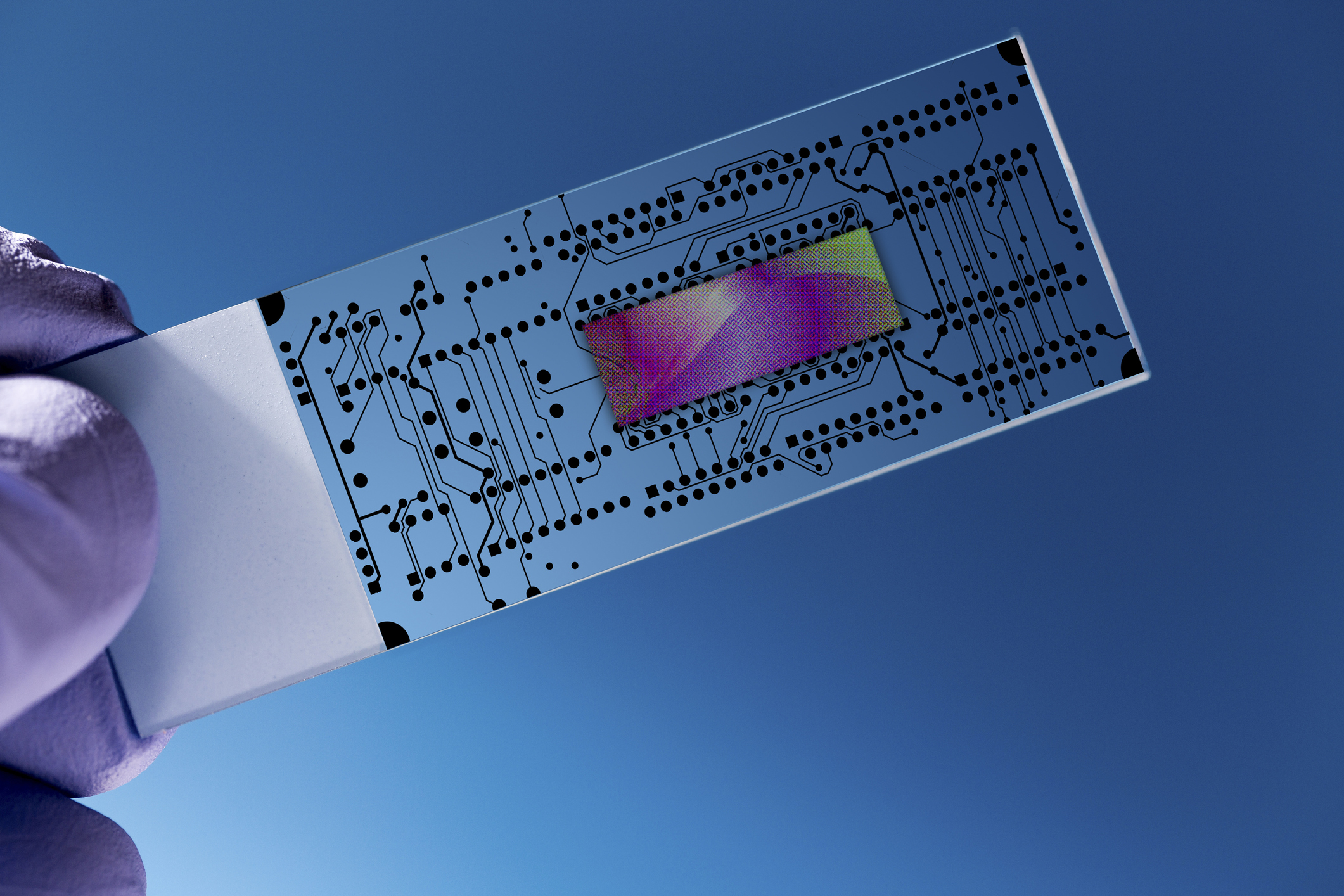
Manufacturing Industry
Technical verification for yield improvement in optical semiconductor manufacturing

Automotive Industry
Analysis of wellness values and behavior change for healthcare service planning using in-vehicle vital data

Food Retail Industry
Distribute personalized coupons using PoS data and causal-based customer grouping