Home
Overview
Objective
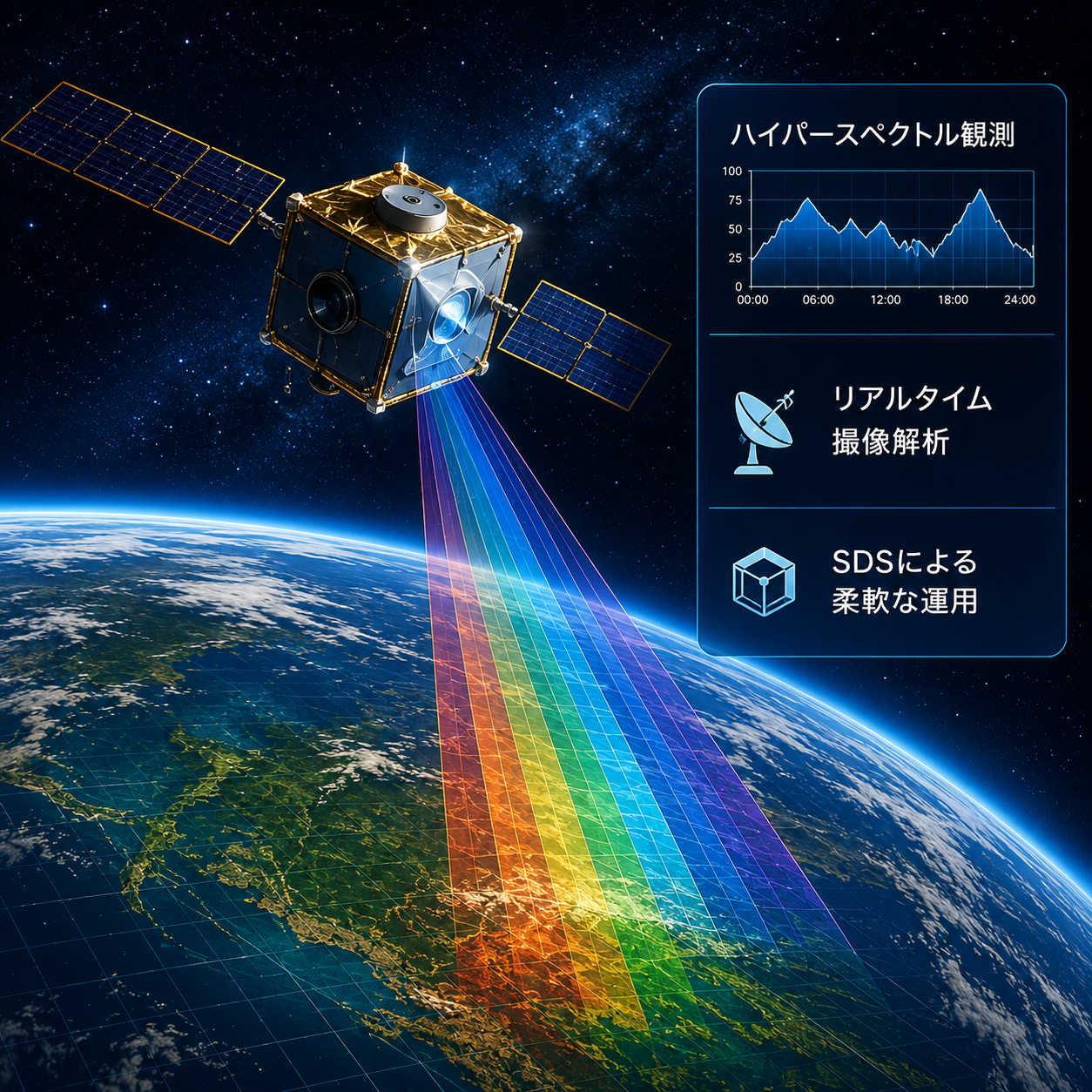
Perform AI and higher-level processing on the satellite to reduce the amount of data transmitted and the time required.
Strength
Enables L2 processing, error mitigation and moving-object detection even in a low-power environment.
Value
Supports highly time-sensitive services for defense/security, logistics and disaster response.
Technical points
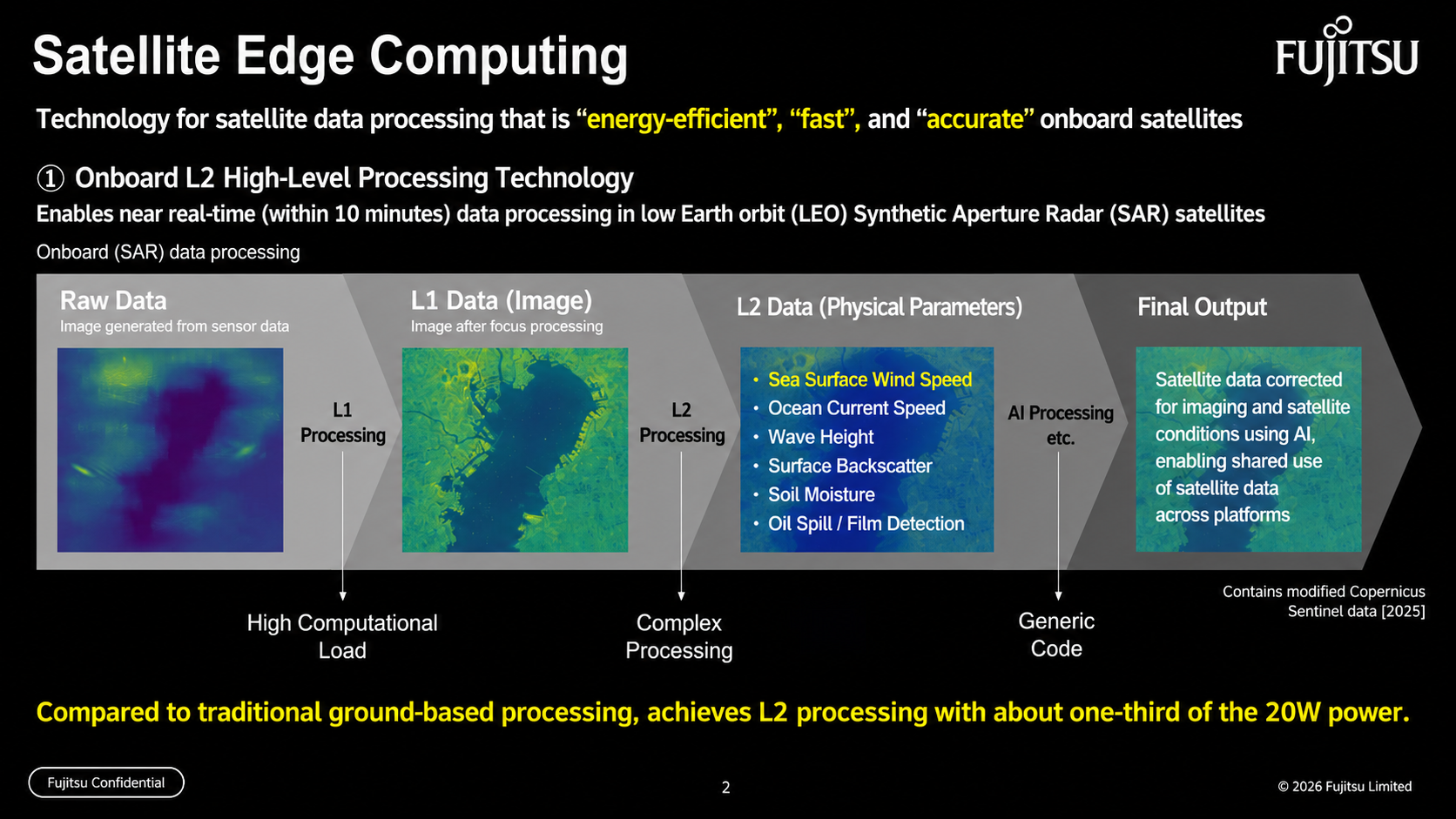
- On-board L2 higher-level processing: Targets near-real-time processing within 10 minutes inside low-Earth-orbit SAR satellites.
- Low-power processing: Achieves processing through L2 at approximately 20 W, about one third of conventional satellite-processor power.
- FRSORA technology: Secures computation time through distributed software-error mitigation and greatly reduces error probability.
- Moving-object detection: Uses RGB imaging-timing differences in push-broom optical sensors to detect even small targets.
Process / approach
Observation → On-board L1 processing → L2 physical quantities → AI analysis → Necessary data delivery
By correcting differences caused by imaging conditions and satellite-specific conditions, the technology makes it easier to use common AI across satellites. It increases the value of outputs such as offshore wind speed, ocean current velocity, wave height, surface reflectance, soil moisture and slope correction.
Applications
In disaster prevention, maritime monitoring, infrastructure inspection, logistics and national defense, this technology shortens the time from imaging to analysis and delivery, aiming to provide data that supports field decisions.