Home
Overview
Challenge
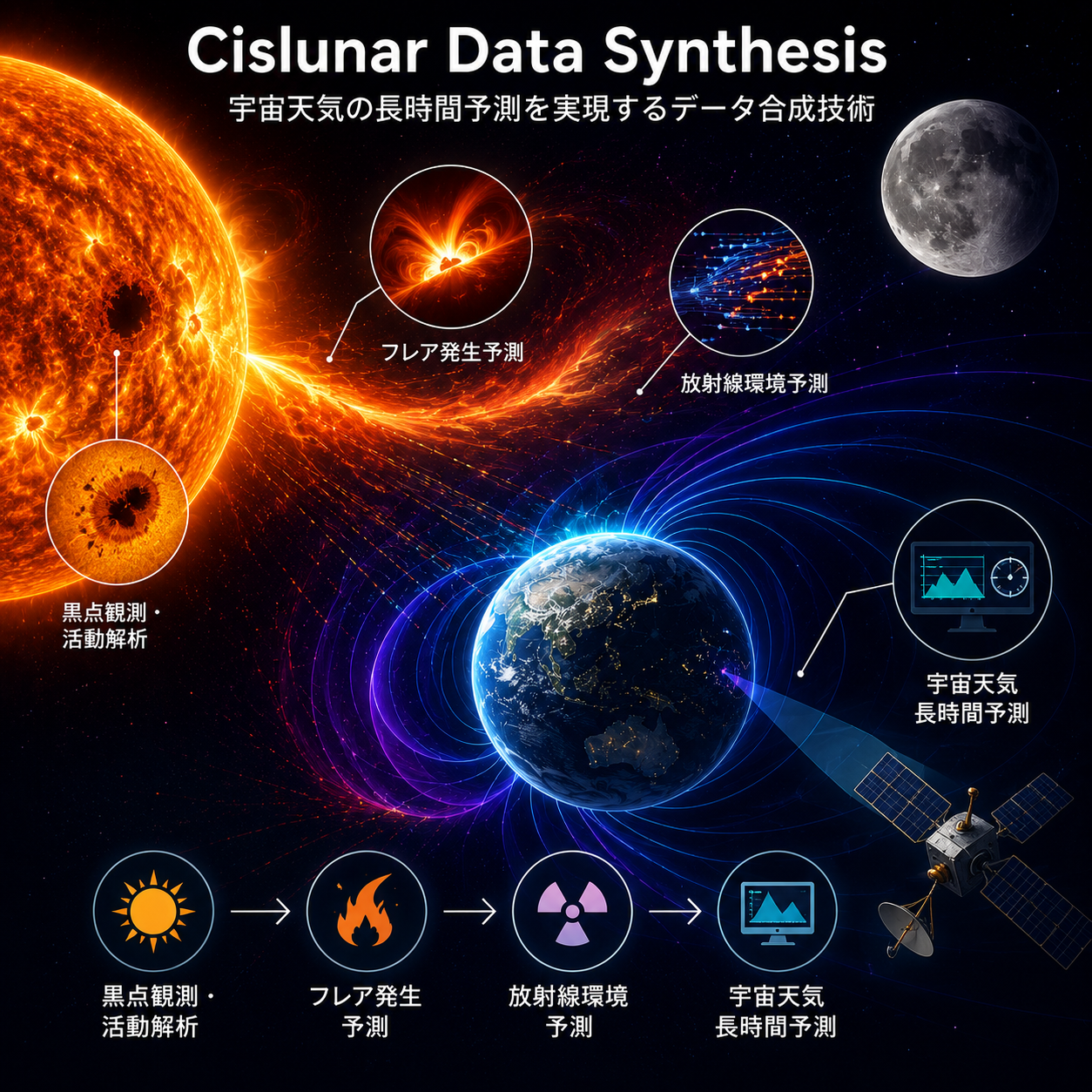
As dependence on space infrastructure grows and activity areas expand, countermeasures for space weather become increasingly important.
Approach
Combines AI, computing and physics to deliver comprehensive forecasts tailored to user needs.
Value
Supports operational decisions in aviation, communications, power, positioning and lunar activities.
Technical points
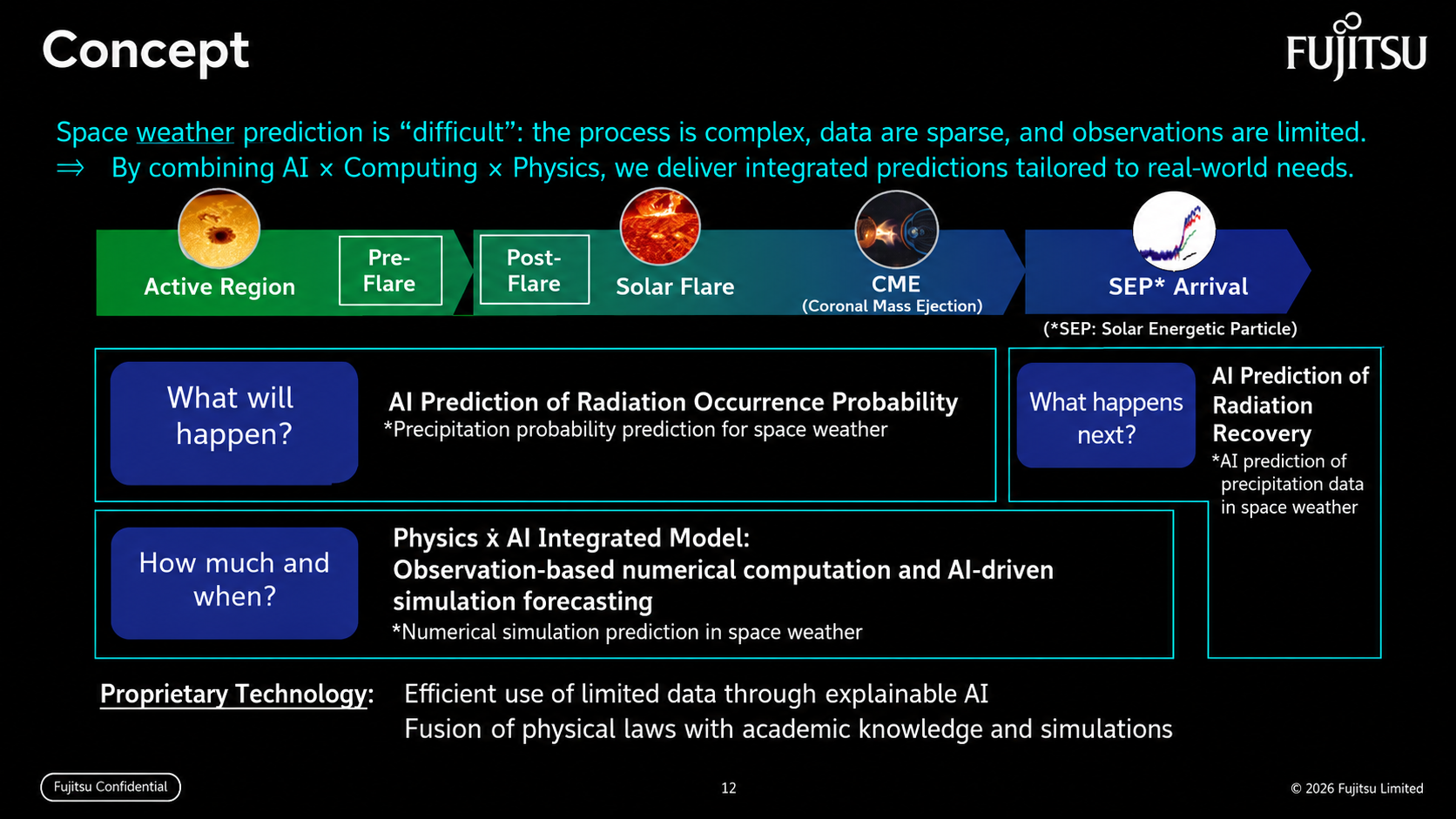
- Explainable AI: Uses limited data and presents the reasons behind predictions.
- Radiation occurrence probability prediction: Determines early whether radiation is likely to arrive.
- Radiation regression prediction: Forecasts how the situation will evolve over time.
- Physics-AI integrated model: Uses coupled simulation across observation, numerical calculation and AI to predict when and how much impact will occur.
Process / approach
The technology aims to provide explainable solar-radiation forecasts that show concrete impacts based on similarity to past events. When new flares or CMEs occur, it updates radiation forecasts and similar-case presentation in a form that helps users take countermeasures.
Applications
Route changes / Alternative communications / Failure response / Drone alerts / Uncrewed activity stop / Crewed activity evacuation
On Earth, it supports aviation, communications, power/railway and positioning. On the Moon, it supports the safety of uncrewed and crewed activities.